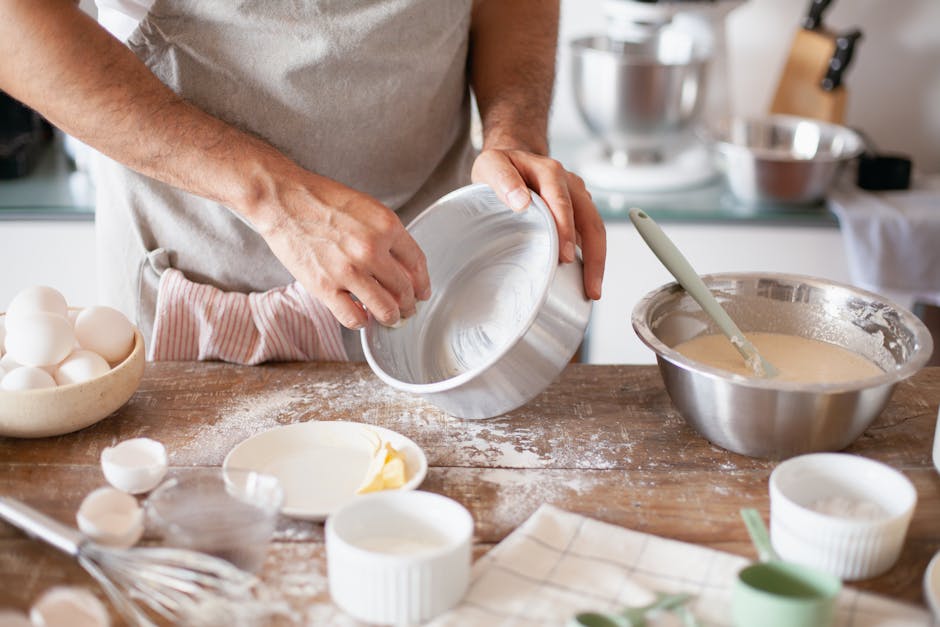
Have you ever started baking a cake only to realize your batter is overflowing or your loaf turns out flat and dense? More often than not, the culprit isn’t the recipe itself—it is using the wrong pan size or miscalculating oven heat.
To help you master your culinary creations, we have gathered Grandma’s essential guide to baking pan sizes and measurements, oven temperatures, and universal kitchen equivalencies. Baking is a beautiful science, and paying attention to these small technical details is the secret difference between a kitchen disaster and a blue-ribbon dessert.
The Core Rule of Baking Success
Before looking at the charts, there is one golden rule you must always follow: always stick to the exact ingredient quantities and preparation steps indicated in the recipe.
This includes preparation times, specified kitchen tools, how ingredients are chopped, and, most importantly, the sequence of the preparation. Baking relies on chemical reactions. If a recipe asks you to cream butter and sugar before adding eggs, doing it in reverse will change the entire texture of your cake.
Standard Baking Pan Sizes and Measurements
Using the right pan ensures that your food bakes evenly throughout. Here are the standard average sizes used in traditional kitchens, converted for both metric and imperial users:
Rectangular Baking Pans (Forma Retangular)
- Small (Pequena): 30cm x 20cm (Approx. 12″ x 8″ inches)
- Medium (Média): 38cm x 26cm (Approx. 15″ x 10″ inches)
- Large (Grande): 44cm x 30cm (Approx. 17″ x 12″ inches)
Round Baking Pans (Forma Redonda)
- Small (Pequena): 22cm diameter (Approx. 9″ inches)
- Medium (Média): 26cm diameter (Approx. 10″ inches)
- Large (Grande): 30cm diameter (Approx. 12″ inches)
Understanding Oven Temperature Ranges
Respecting the established cooking temperatures is crucial. If your oven is too hot, the outside of your bread will burn while the inside remains raw. Here is a simple reference guide for standard oven terms:
- Low (Baixo): 120°C to 180°C (250°F to 350°F) – Perfect for delicate meringues or slow-roasting meats.
- Moderate/Medium (Moderado): 180°C to 200°C (350°F to 400°F) – The universal sweet spot for cakes, cookies, and everyday baking.
- Hot (Quente): 200°C to 230°C (400°F to 450°F) – Great for roasting vegetables or getting a crispy crust on breads.
- Very Hot (Muito Quente): 230°C to 290°C (450°F to 550°F) – Used for broiling or homemade pizzas.
Essential Kitchen Equivalencies and Weights
To keep your baking pan sizes and measurements accurate, you need to measure your ingredients correctly.
Liquids (Líquidos)
- 1 Cup: 240 ml
- 1/2 Cup: 120 ml
- 1/3 Cup: 80 ml
- 1/4 Cup: 60 ml
- 1 Tablespoon (Sopa): 15 ml
- 1 Teaspoon (Chá): 5 ml
- Note for Brazilian recipes: 1 Copo Americano is traditionally equivalent to 200 ml.
Butter, Margarine, and Fats (Manteiga)
- 1 Cup: 200g (Approx. 10 tablespoons)
- 1/2 Cup: 100g
- 1/3 Cup: 65g
- 1 Tablespoon: 20g
Retire from the Guesswork: Invest in Measuring Tools
If you are still trying to use regular coffee mugs or soup spoons to measure your ingredients, it is time for an upgrade. Treat yourself to a proper set of measuring cups and spoons. They feature embossed markings that will never wear off and guarantee absolute accuracy.
A standard Measuring Spoon Set includes:
- 1 Tablespoon (15ml)
- 1/2 Tablespoon (7.5ml)
- 1 Teaspoon (5ml)
- 1/2 Teaspoon (2.5ml)
- 1/4 Teaspoon (1.25ml)
A standard Measuring Cup Set typically includes nested cups marking 1 cup, 1/2 cup, 1/3 cup, and 1/4 cup sizes.
Grandma’s Wisdom: The Secret to Seasoning
While baking requires strict math, everyday cooking leaves room for your personal touch. When a recipe states “Salt and black pepper to taste” (a gosto), it means adjusting it to your family’s unique palate.
However, Grandma always warns: Be careful! It is incredibly easy to add a pinch of salt at the very end of a preparation if it tastes bland. But if you over-salt a dish early on, saving it is practically impossible. Season in layers, taste as you go, and let your palate guide you.
For more advanced strategies on mastering your kitchen metrics, check out our comprehensive Cooking Measurement Conversion Table to level up your culinary skills.
Frequently Asked Questions (FAQ)
Can I use a round pan instead of a rectangular pan?
Yes, but you must match the volume. A 9″x13″ rectangular pan holds about 14 cups of batter, which is roughly equivalent to two 9-inch round pans. Keep an eye on the baking time, as depth changes how fast heat reaches the center.
Does a standard cup always mean 240ml?
In US and Latin American baking, yes, a standard cup is 240ml (or 236ml to be scientifically exact). However, in the UK, Australia, and New Zealand, a metric cup is legally defined as 250ml. Always check where your favorite recipe was written!
What Is Your Biggest Kitchen Challenge?
Do you struggle more with getting the oven temperature right, or finding the perfect baking pan? Let us know your kitchen stories in the comments below, and share this guide with someone who loves to bake!